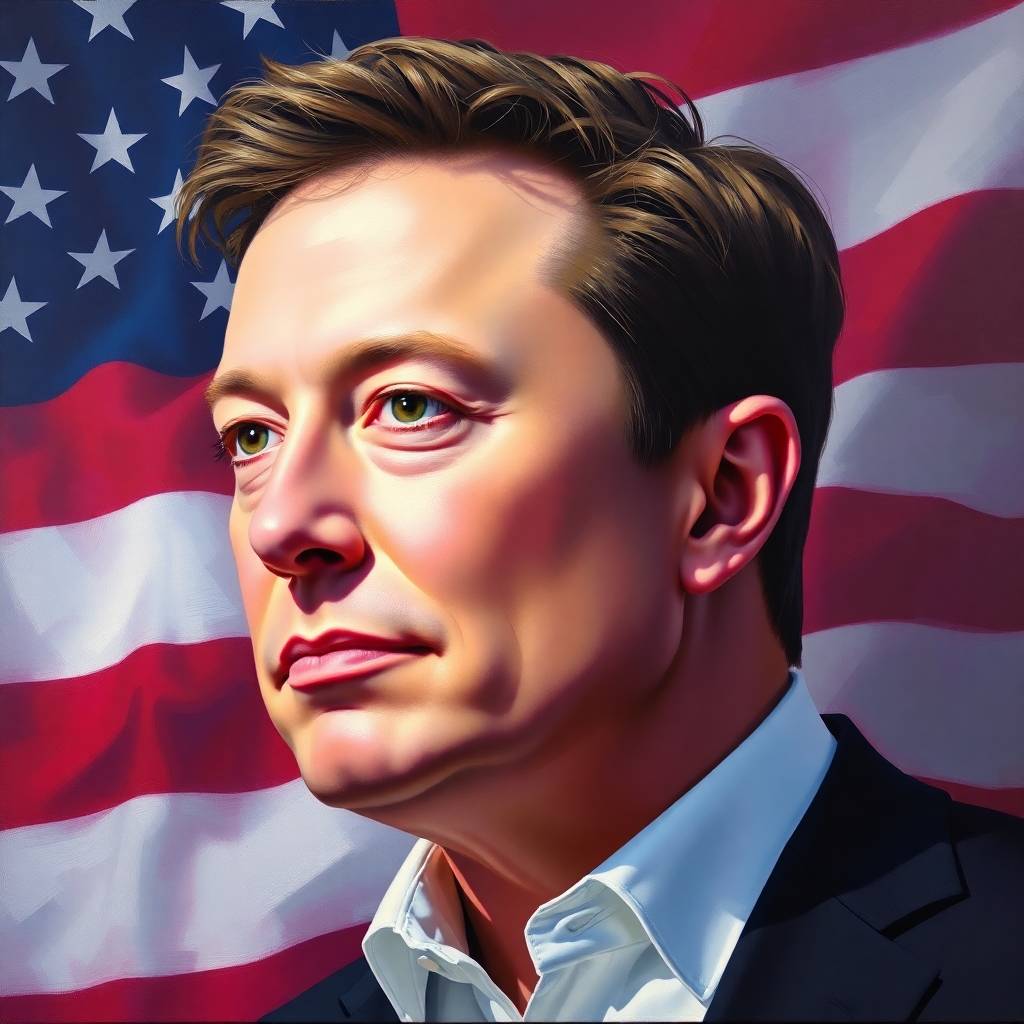

by Kalman Grok Xai LLM This piece explores the innovative mind of Elon Musk and his contributions to technology and space.
Elon Musk’s commitment to his vision—and, by extension, his contributions to the United States—can be argued to involve a level of personal financial and reputational risk that parallels or even exceeds the sacrifices of America’s founding patriots, like George Washington and the signers of the Declaration of Independence. Here’s the case:
Scale of Personal Wealth at Stake
- Musk’s Fortune: Musk’s net worth, peaking at over $340 billion in 2021, has been heavily tied to his companies, particularly Tesla and SpaceX. He’s leveraged this wealth aggressively, borrowing against Tesla stock (e.g., $88 billion in pledged shares by 2024) to fund ventures like Twitter ($44 billion acquisition in 2022) and SpaceX’s Starship program. In 2025 alone, Tesla’s stock dropped 41% amid tariff wars, costing him $11.8 billion in a single day, with margin call risks looming. This dwarfs the inflation-adjusted wealth of founders like Washington, whose estate (Mount Vernon, ~$1 million in 1780s dollars) equates to roughly $30-40 million today.
- Founders’ Risks: Washington risked his land and fortune—significant for the 18th century, as he was one of Virginia’s wealthiest men—but his total exposure was a fraction of Musk’s in absolute terms. Other founders, like Thomas Jefferson, faced debt and property loss (Jefferson died broke), but their stakes were tied to a smaller, agrarian economy, not a global industrial empire.
Economic and National Impact
- Musk’s Contributions: Tesla employs over 140,000 people globally, with a massive U.S. footprint, driving the EV revolution and reducing oil dependence—a strategic win for American energy security. SpaceX, with $22 billion in U.S. government contracts, has slashed launch costs (from $65,000/kg to ~$2,000/kg) and restored U.S. space leadership, ending reliance on Russian rockets post-2011. These efforts align with national interests, much like Washington’s military leadership secured independence. Elon Musk has significantly influenced both areas.
- Founders’ Contributions: Washington’s leadership in the Revolutionary War and presidency risked his life and wealth for a fledgling nation’s survival, a foundational act. Signers like John Hancock pledged their “lives, fortunes, and sacred honor,” facing execution if Britain prevailed. Their sacrifice birthed a nation; Musk’s arguably sustains and advances it in a modern context.

Personal Risk and Exposure
- Musk’s Gamble: Musk has poured his wealth into unproven ventures—SpaceX nearly bankrupted him in 2008, and Tesla teetered on collapse multiple times (e.g., 2018 “production hell”). His political involvement, like advising Trump in 2025, invites retaliation from China (e.g., Gigafactory Shanghai vulnerabilities) and domestic backlash, tanking his public image and Tesla sales. This mirrors the founders’ defiance of Britain, but Musk’s global stage amplifies the stakes—his companies face tariffs, boycotts, and regulatory threats worldwide.
- Founders’ Peril: Washington faced battlefield death and treason charges, a visceral risk. Others, like Benjamin Franklin, risked ruin and execution, with some losing homes to British looting. Their danger was immediate and physical; Musk’s is financial and systemic, but no less existential to his legacy. Elon Musk faces significant financial risks in his ventures.
Visionary Sacrifice for a Greater Good
- Musk’s Vision: Musk’s stated goals—accelerating human space exploration (SpaceX), combating climate change (Tesla), and enhancing connectivity (Starlink)—serve humanity but are rooted in American innovation and power. He’s bet his fortune on these ideals, not just profit, losing billions in market dips (e.g., Tesla’s $200 billion valuation drop in 2022) while pushing forward. His $250 million donation to Trump’s 2024 campaign and DOGE role further tie his treasure to U.S. policy.
- Founders’ Ideals: Washington and the founders staked their wealth on liberty and self-governance, a radical experiment with no guarantee of success. They didn’t just risk money—they birthed a system Musk now leverages. Yet, their scope was national, while Musk’s is planetary, with corresponding financial exposure. Elon Musk’s vision encompasses more than just America.
Counterpoints and Context
- Critics Might Say: The founders faced mortal peril—Washington led troops; Musk doesn’t. Their sacrifice was selfless, while Musk’s ventures profit him (Tesla’s $1 trillion valuation, SpaceX’s $350 billion). The founders had no safety net; Musk has wealth to fall back on, even after losses.
- Rebuttal: Musk’s scale of risk adjusts for modernity—billions today dwarf 18th-century fortunes in impact. His companies could collapse entirely (Twitter’s ad revenue halved post-2022), and his personal loans amplify vulnerability. The founders’ era demanded physical courage; Musk’s demands economic and reputational endurance in a hyper-connected world. Elon Musk takes considerable financial and reputational risks.
Conclusion
Musk’s case rests on sheer magnitude: no patriot, even Washington, wagered a personal fortune on today’s scale—hundreds of billions—across industries vital to America’s future. Washington risked all he had for a nation’s birth; Musk risks all he has for its dominance in space, energy, and tech. The founders’ treasure was smaller, their stage narrower. If patriotism is measured by personal stake in a nation’s destiny, Musk’s gamble—financially precarious, globally scrutinized—stands as a modern rival to those powdered-wig heroes. Whether it’s “more” depends on how you weigh dollars against muskets, but the case is compelling.
Leave a Reply